No Comments

‘Radical’ way coronavirus has changed the way we want to live and the homes we will live in

More flexible living spaces will become the norm.

A dramatic shift in what Australians want our homes to be and how we interact with our surrounding communities is creating a new and reimagined lifestyle Zeitgeist.

COVID-19, and the copious amounts of time we have spent isolating at home, has served to hasten the pace of these changes and strengthen our desire to adapt them.

At its core is the re-emergence of the village at the heart of our daily lives, and also the desire for greater privacy or ‘me time’, including ‘the nude factor’.

New developments will feature more village-style living.

“The biggest issue COVID-19 has brought about is the rise of the village,” said Adam Haddow, architect and urban designer at SJB Architects.

“Modernism previously told us we couldn’t have working, living, sleeping and recreation all together but coronavirus is encouraging that. We are living more locally.

“It is radical in a way. The villages are prospering at the moment, suburban strips of shops are going gangbusters while in contrast the CBD sits empty.

MORE NEWS

The rapid rise of ‘armchair investing’

How new Melbourne lockdown will hit real estate

“Knowing about where you live and the community you live in has become much more important. You are getting amenity from your local goods and services, you know the man or woman who owns the local shop. You have a link with the dry cleaner.

“It does fundamentally change the way you live.”

The domino effect of this village-centre approach will be at the heart of new designs and developments.

Left-right: Architect and urban planner Adam Haddow of SJB Architects and Fabrizio Perilli, Fabrizio Perilli, CEO of TOGA, looking at the Surry Hills Village model. Picture: supplied

Architect and urban planner Adam Haddow (left) of SJB Architects and Fabrizio Perilli CEO of TOGA. Picture: supplied

“This all plays into the expectations of projects,” Mr Haddow said.

“People want diversity. They want some level of a supermarket, a coffee shop, a baker, a newsagent and a butcher and it becomes more about locally not nationally.

“It is not about gaining an income for the strata through mixed retail space, it is about adding to your life. Do you feel safe, healthy, that you are living a quality life? All of these things are very much front of mind now. That sense of amenity is vital. We realise now we don’t want to drive across town to get what we want.”

At an individual, couple or family level this has also led to a revision of our lifestyles.

“The COVID-19 scenario has meant a review of what living means to us, creating spaces that are meaningful and flexible and that can give that space where you can work quietly,” said

Fabrizio Perilli, CEO of TOGA Development and Construction.

The COVID-19 epidemic has taught us to demand more flexibility from our living spaces.

MORE NEWS

Where the bargain COVID-19 home buys are

Russell Crowe’s ‘bingo island’ up for grabs

“From an apartment block perspective that means reviewing that community space, those dedicated, shared spaces, Outdoor areas, common, landscape areas where you sit outside and reflect, to be a space of sufficient size, welcoming and providing privacy.

“That flexibility in the home itself can be equally provided for an apartment or a house.”

Time spent working from home has also challenged our ideas about what our home should provide.

“People now really appreciate that other room, or study room, they can close off,’ Mr Perilli said.

Mixed used commercial and residential hubs, such as this Sunshine Coast development, have become very sought after. Picture: Patrick Woods / Sunshine Coast Daily.

“They have also come to enjoy the privacy that an enclosed kitchen can provide and the more efficient use of storage space. There is also the usefulness of a multipurpose room. That’s not a living room or a bedroom but a flexible space that can change as you or your family does.”

More time at home and more time to ponder our lives, as a result of lockdown and isolation during the coronavirus epidemic, also means we know exactly what we want.

“People have now spent a lot of time at home and they are seeing the value in what they have and what they don’t have,” Mr Haddow said.

“They need a quiet spot where they can sit on the computer. They want to have a bit of a backyard so they don’t have to take the dog outside and around the block to pee.

“It is a more local way of living. It is more connected. You will see a return to more Juliette balconies, more communal living space in the bigger developments. People know what they want more than they ever did before. Before they wanted what was nice, now they want what is essential, what they are going to use.

141111 TWAM EMBARGO FOR TWAM 11 oCT 2014 NO REUSE FEE APPLIES   Queensland
Hillside Crescent, Hamilton, Brisbane
Lochiel (1858), on the lower slopes of Hamilton Hill overlooking the river, is set on a 2344sqm block in a lovely garden with century-old trees. The six-bedroom mansion boasts gold-leaf cathedral ceilings, original 1850s fireplaces and Juliette balconies. As well as the pool, there's a putting green. Havig & Jackson, 0418 721 467. $8 million plus Picture: Captioned As

Juliette balconies are making a comeback.

MORE NEWS

Inside Liz Hurley’s uber cool iso pad she bought with Warnie

Is property investment through superannuation right for you?

“In apartments people don’t want a big open space any more. That makes it difficult to live in. People want separation and visibility. Even recently we were designing with an amazing sequence of space. But it’s not longer one size fits all. It’s turning back to customised.

We also want a strong sense of privacy.

‘I call it ‘the nude factor’”, Mr Haddow said.

“People feel they should be able to walk around in the nude, they don’t want to have to be dressed and worry about what the neighbours think because they can see what they are doing.”

The post ‘Radical’ way coronavirus has changed the way we want to live and the homes we will live in appeared first on realestate.com.au.
No Comments

Sydney housing market: 15 new suburbs now have $1 million-plus median price after strong growth

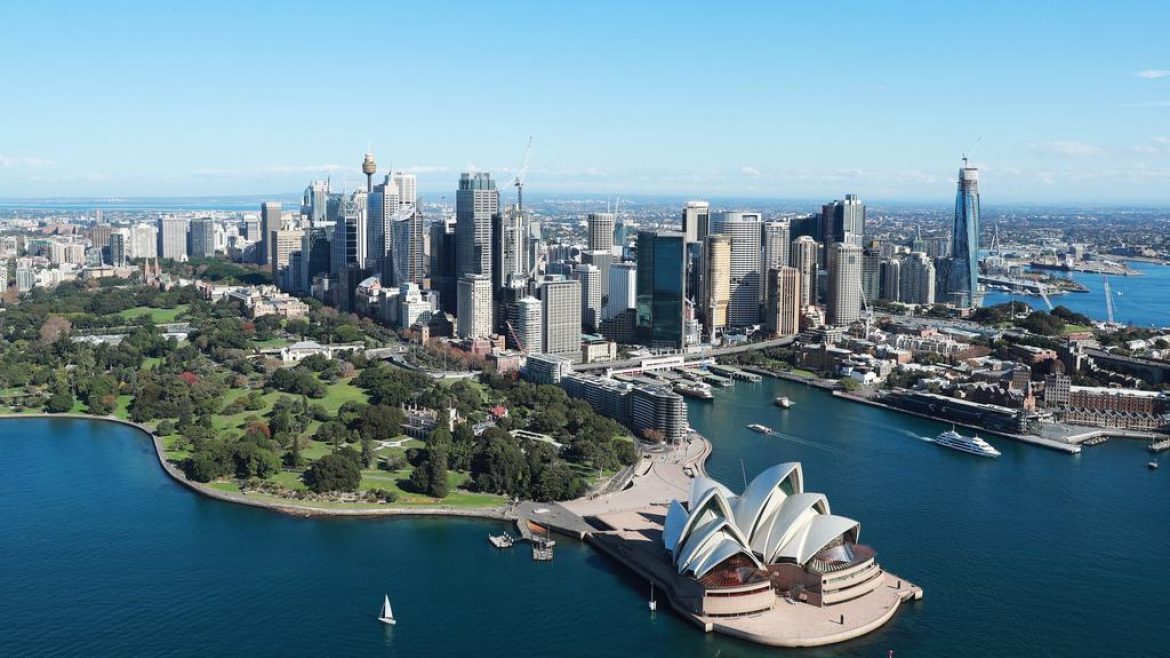
Aerial view of the Sydney CBD

Sydney has seen the median house price in another 15 suburbs surpass $1 million. John Feder/The Australian

Fifteen suburbs across Sydney have crossed the $1 million median price barrier for the first time.

The suburbs, located predominantly in Hornsby Shire, The Hills and Sutherland Shire, saw their median house price surge in the 12 months to June, thanks to record-low interest rates fuelling the market.

It brings the number of suburbs in Sydney with home values above $1 million to 209, following house prices growing by 13.3 per cent over the corresponding period.

MORE: Inside Karl Stefanovic’s new waterfront mansion

Home for sale on Mount Panorama’s famous Conrod Straight

Where foreign buyers are looking to buy in Sydney

Real Estate

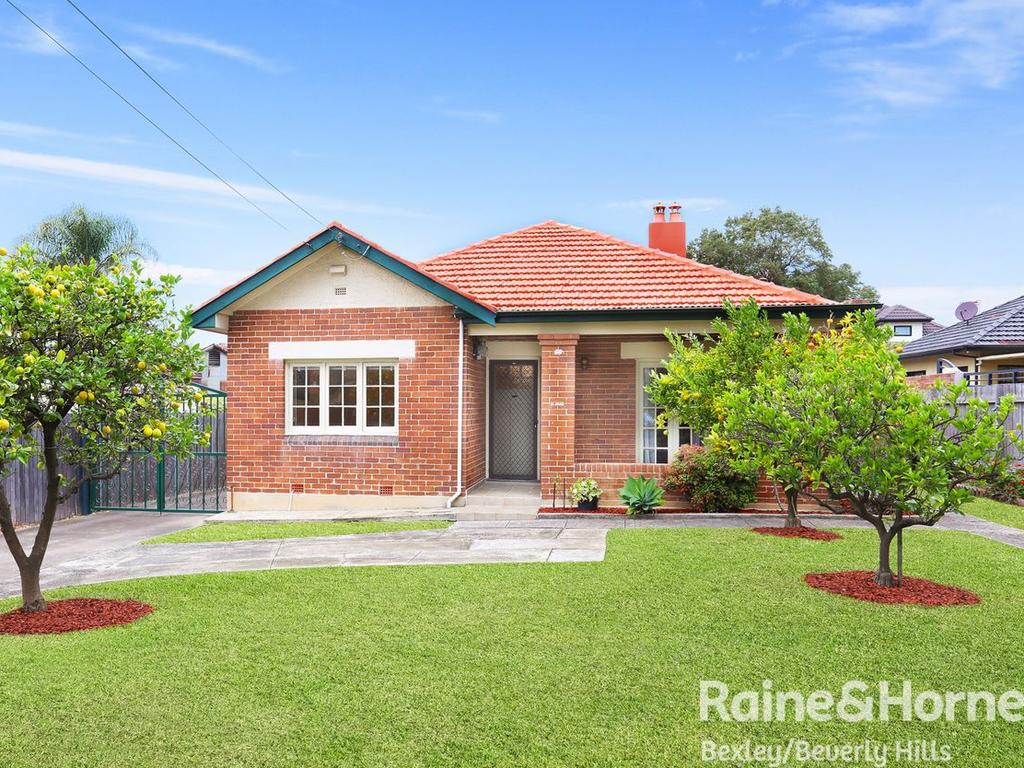
No. 17 Westbourne St sold last month in Bexley for $1.96 million.

Realestate.com.au data showed Bexley in the city’s south had the strongest growth of the new entrants, with prices growing $266,000 to $1.251 million. Neighbouring Bayside suburb Arncliffe also surpassed $1 million.

Raine and Horne Bexley director Sam Epsimos said buyers from the inner west and eastern suburbs have been the driving force behind the 21.26 per cent annual price growth seen in Bexley.

“These buyers are pushing the prices up, as they are finding the suburb offers far better value than what they would get in their area,” he said.

REA chief economist Nerida Conisbee.

“Bexley is also in a great location with not only the city on its doorstep, but the M5 and the new M8 pretty much connects this area to the rest of Sydney.”

Hornsby Shire had three suburbs surpass $1 million with Asquith, Mount Colah and Berowra Heights. The Hills had Glenwood, Winston Hills and The Ponds make the cut, while Wamberal on the Central Coast saw home values increase 7.89 per cent to $1.01 million.

Northmead was the sole Parramatta suburb to break $1 million, with the median house price now $1.01 million. Jannali, Menai and Yarrawarrah from Sutherland Shire along with Belmore and Picnic Point from the Canterbury-Bankstown area also saw house values surpass $1 million.

Strong demand from buyers has propelled the market in the past year.

REA chief economist Nerida Conisbee said suburbs with prices over $1 million have remained stable during the coronavirus pandemic due to the strong momentum of the past year.

“The property market is currently being supported by high levels of stimulus, a stable banking system, mortgage payment freezes and relative confidence among buyers,” she said.

Ms Conisbee said 15 new entrants in the million-dollar club highlighted how extreme some of Sydney’s house prices were, particularly near the city centre.

“With 15 new suburbs bringing the million-dollar club total to 209 million-dollar suburbs, it is becoming more difficult to find an inner or middle ring suburb for under $1 million,” she said.

Despite Sydney experiencing some of the best market conditions since the prolonged housing boom of 2014 to 2017, four suburbs were booted out of the million-dollar club.

Campsie in the inner west suffered the biggest fall with its median price dropping from $1.19 million to $985,000. Lidcombe, North Avoca and Sutherland also saw prices dip below $1 million.

SIGN UP FOR THE LATEST NSW REAL ESTATE NEWSLETTER

The post Sydney housing market: 15 new suburbs now have $1 million-plus median price after strong growth appeared first on realestate.com.au.
No Comments

6 sales tips for agents who hate sales

As a new agent, you might be hating the sales process, worried to come across as pushy. But it doesn’t have to be scary or unethical. Instead, sales can be an enjoyable process for both you and your clients. Here’s how.

No Comments

A tale of two loans

“It was the best of times, it was the worst of times…” is how an article with this title should probably start. But when I compare getting a loan two years ago when I first bought a home to when I recently refinanced the same loan, it’s not fair to throw around words like “worst” or “best.”

No Comments

Real estate blogs: Why they’re important and what you should post

Blogs, short for “weblogs,” have been around since the early ’90s. They were originally used as a personal webpage where the author logged their thoughts on life. Today, these sites have evolved into information hubs, where people go to learn, get tips, and find valuable industry information. As a result, blogs are integral to any business marketing plan.