No Comments

Brunswick Victorian house becomes modern masterpiece

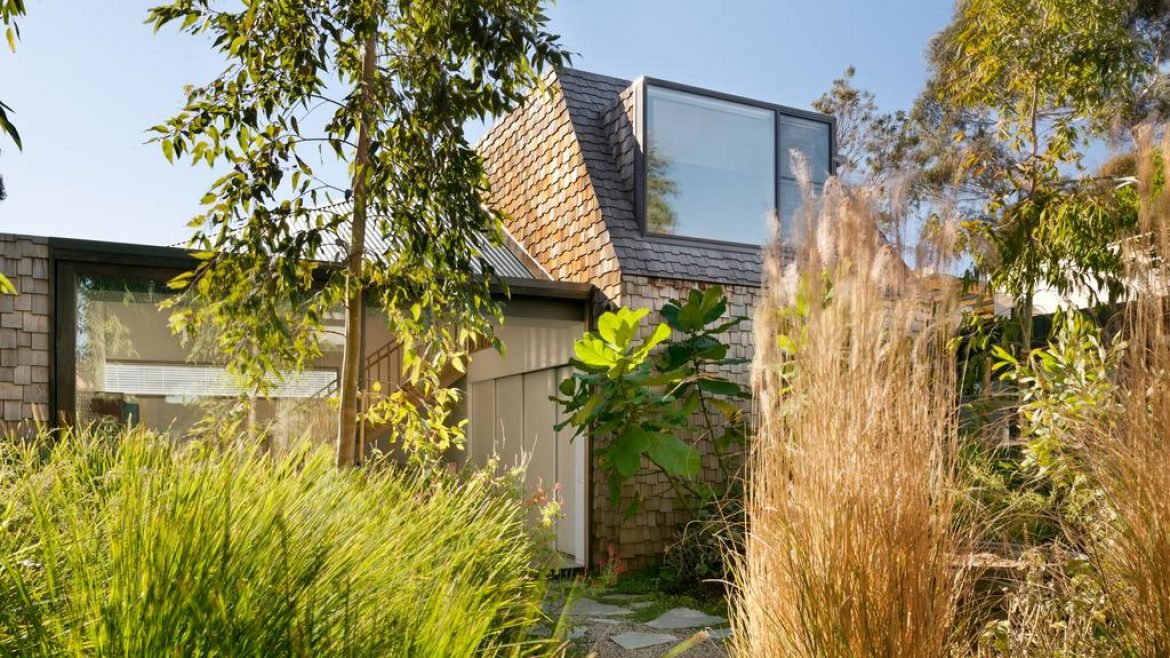
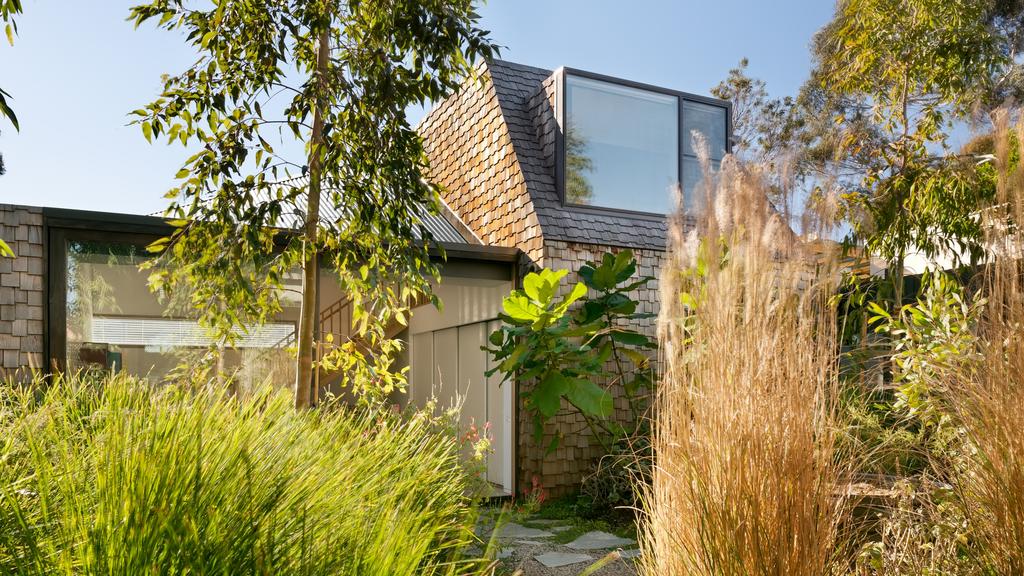
Shingles and shrubs. Photo: Emma Cross

The roof was rusted out, the garden had taken over the rear, and some veranda stumps had ceased to function as a support structure.

Yet this Brunswick double-fronted Victorian caught the eye of would-be new owners, who were determined to save the home.

“So many of these cottages were bought, bulldozed and replaced with insensitive developments,” said Luke Rhodes of Zen Architects, who the owners commissioned to reinvigorate the abode.

RELATED: Marcus Fraser: Olympic golfer selling Beaumaris mid-century house

Point Lonsdale house short-listed for multiple awards quick to sell

Dot’s House, Fitzroy: House designed with the cat in mind
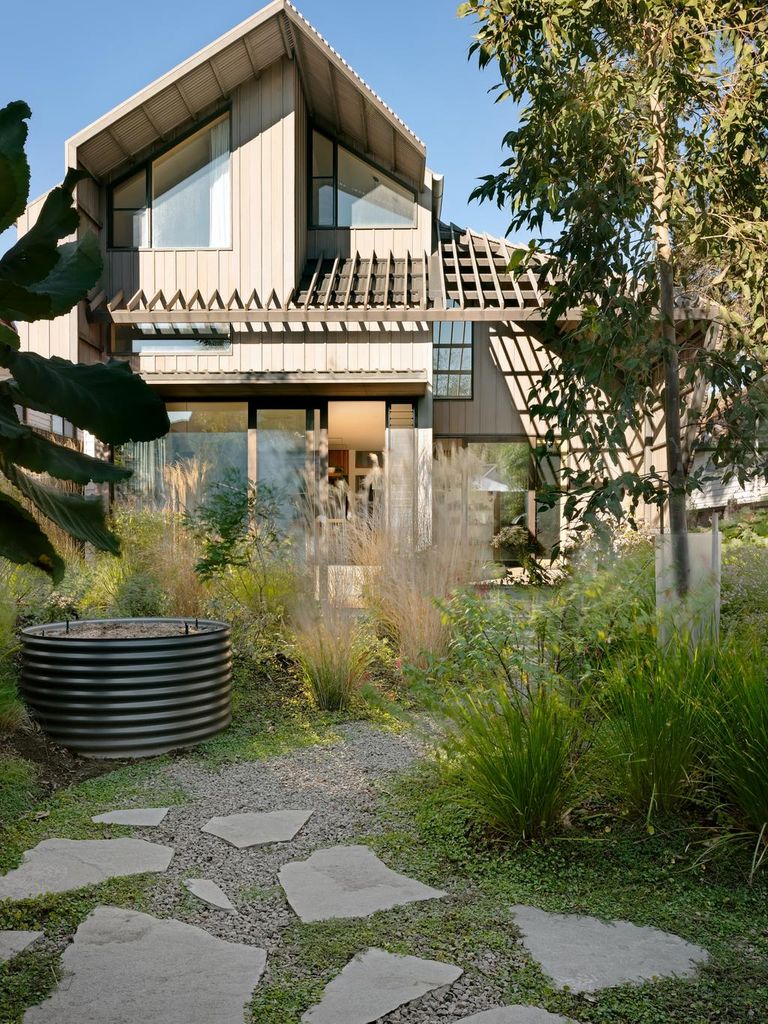
Timber tempter. Photo: Emma Cross
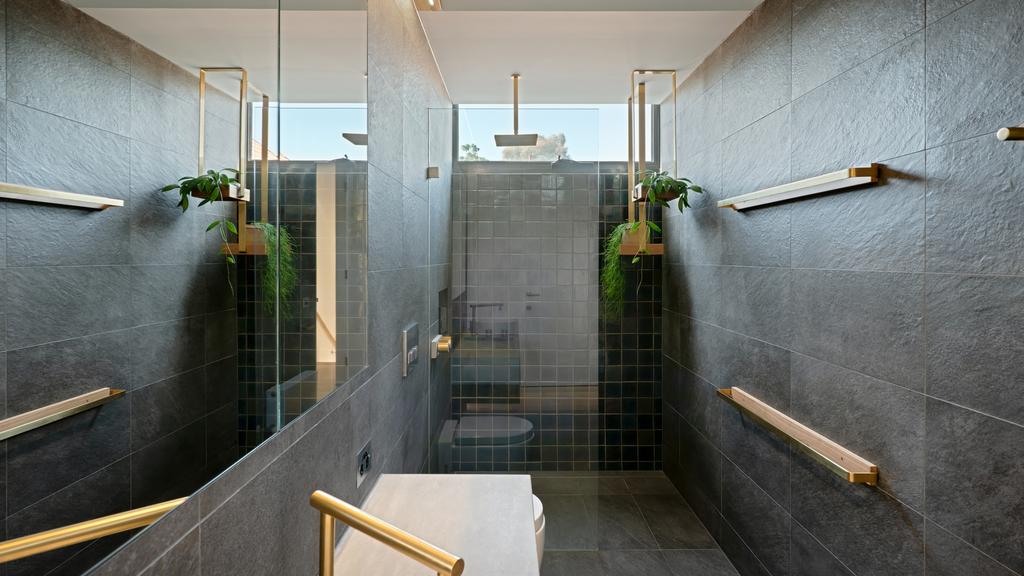
Textural. Photo: Emma Cross

“The owners wanted to break the cycle by showing something amazing can be achieved with these old houses.”

The cottage had been in the one family since the early 1900s, before being sold to the new owners a few years back.

It had three bedrooms towards the front, with a lounge room and kitchen tacked on the back during a 1970s renovation. There was an outhouse and shed, too.

“We were able to save it,” Mr Rhodes said. “But in the wrong hands, it would not have been saved.”
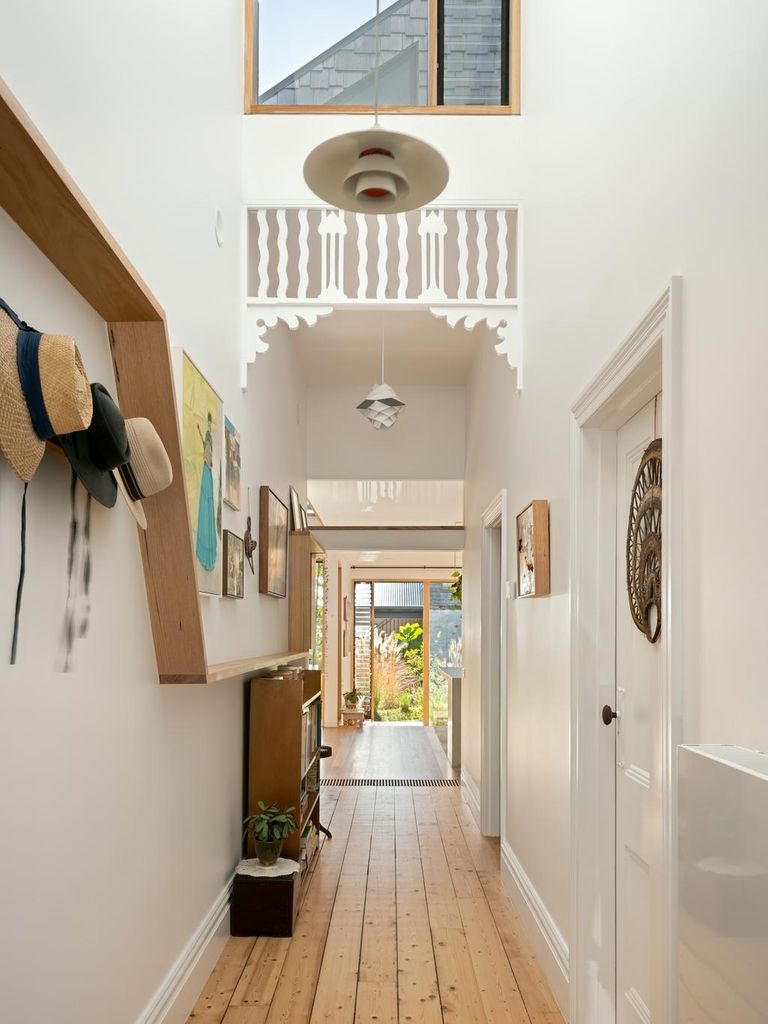
Lofty heights. Photo: Emma Cross

Total overhaul

Mr Rhodes spruced up and repainted the old weatherboards, remilled replacement veranda posts and added a new deck to the veranda.

He also kept the facade’s sash windows.

“We reconditioned the windows entirely and added new glazing,” he said.

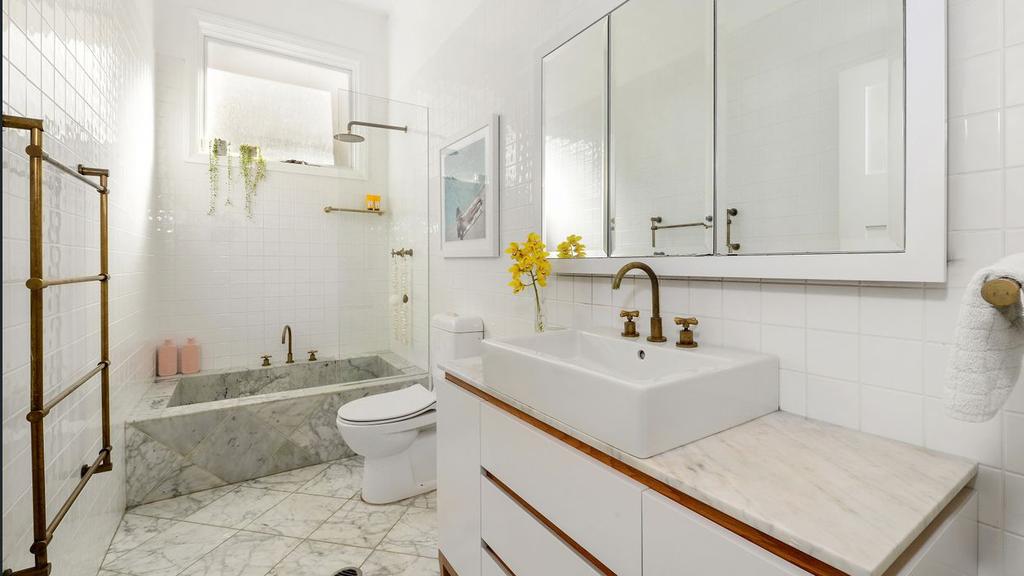
The first two original rooms were restored, including their ornamental fireplaces, while a smaller bedroom was transformed into a modern bathroom with a rain shower.

“We did reintroduce some Victorian-era cornices and ceiling roses into those front rooms, too,” Mr Rhodes said.

The floors and ceilings were replastered and insulated, with about half the former home kept as part of the new modern incarnation.

The south-facing front door opens on to a dark hallway. So Mr Rhodes introduced natural light by lifting the ceiling line up to the roof line and adding a high window above the archway for northerly sunshine.
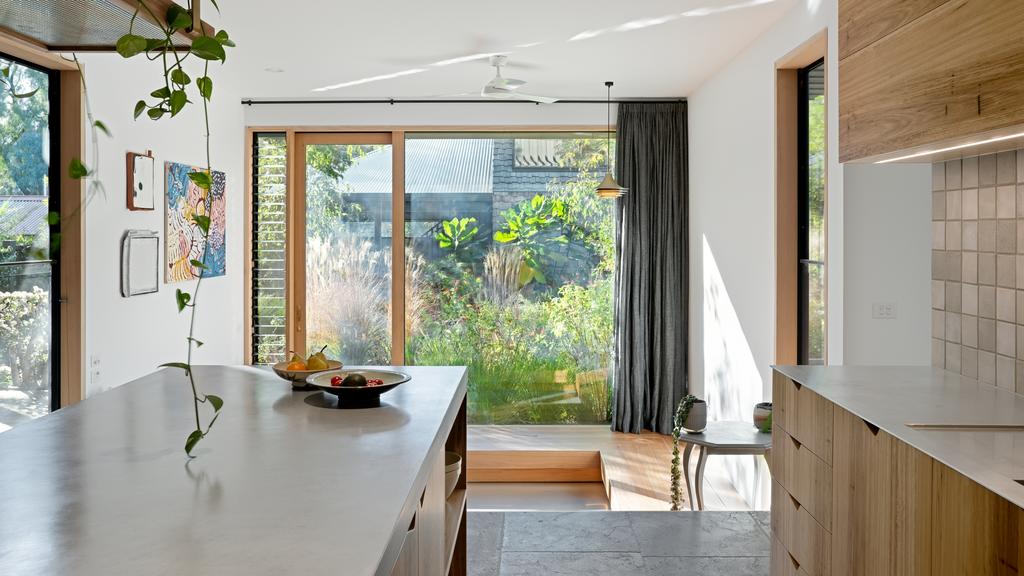
Shrubbery provides a sense of privacy. Photo: Emma Cross
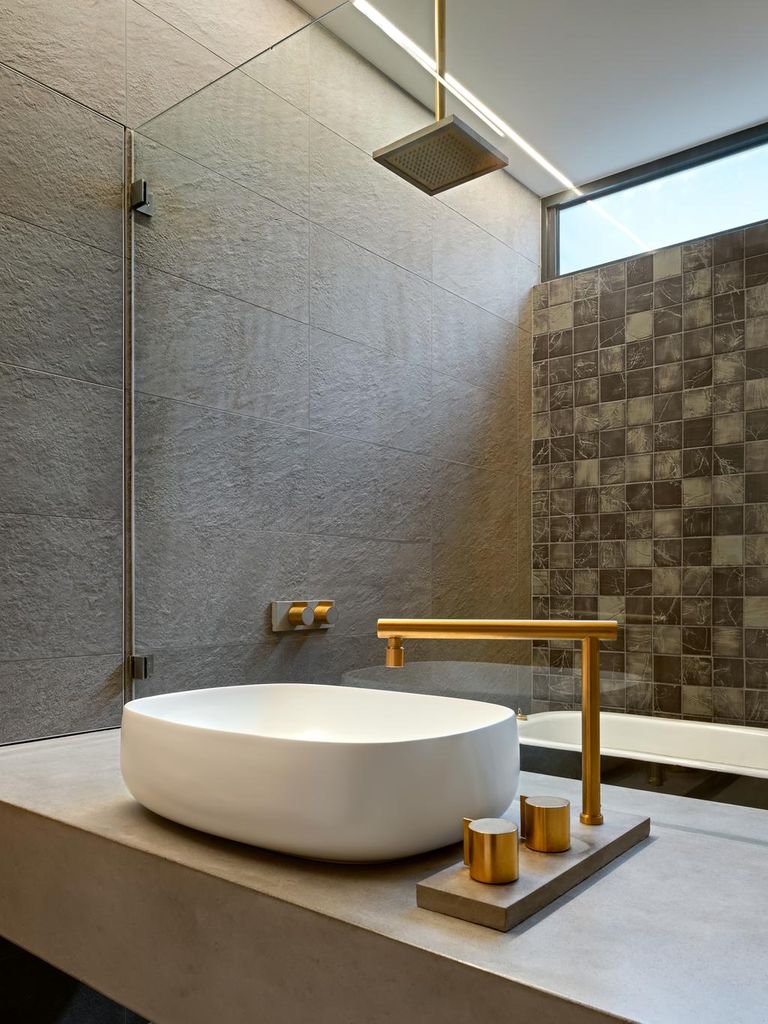
All style. Photo: Emma Cross

Out of the box

When it came to the new section of the house, Mr Rhodes said his ethos was to retain and restore anything that was original, but to remove much of what was added in the ’70s renovation.

“The owners didn’t want it to be a clear contemporary box on the rear of the house. They wanted it to be respectful to the original forms of the cottage,” he said.

“That is why you cannot see the new addition from the street — it is very unobtrusive.”

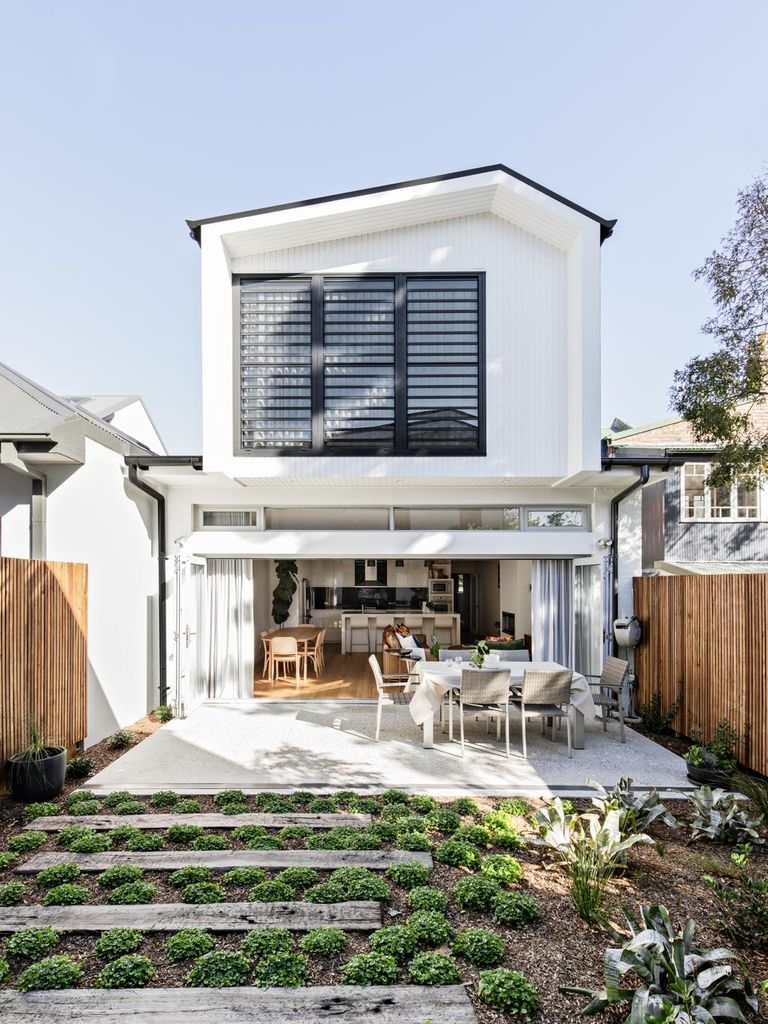
A second storey was added, featuring a first-floor internal courtyard, a study and a north-facing main bedroom.
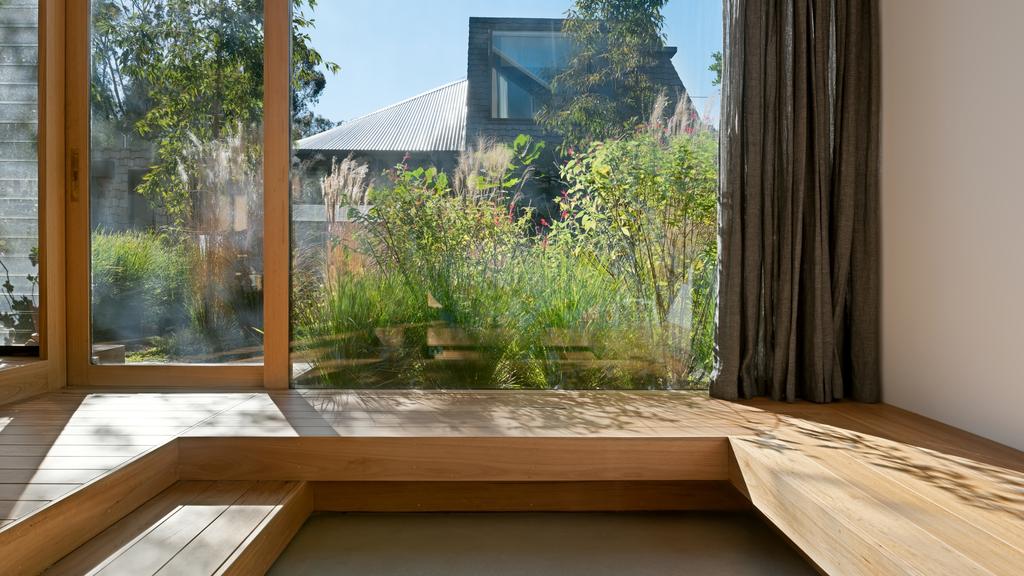
Sun-drenched conversation. Photo: Emma Cross
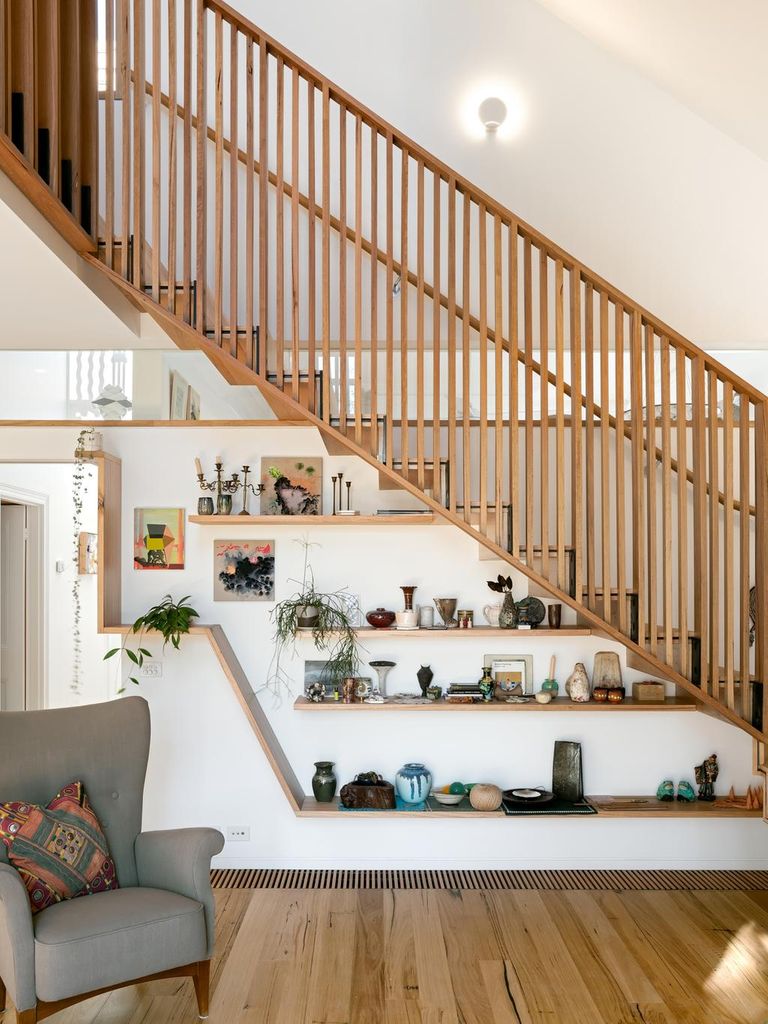
Stylish shelves and staircase. Photo: Emma Cross

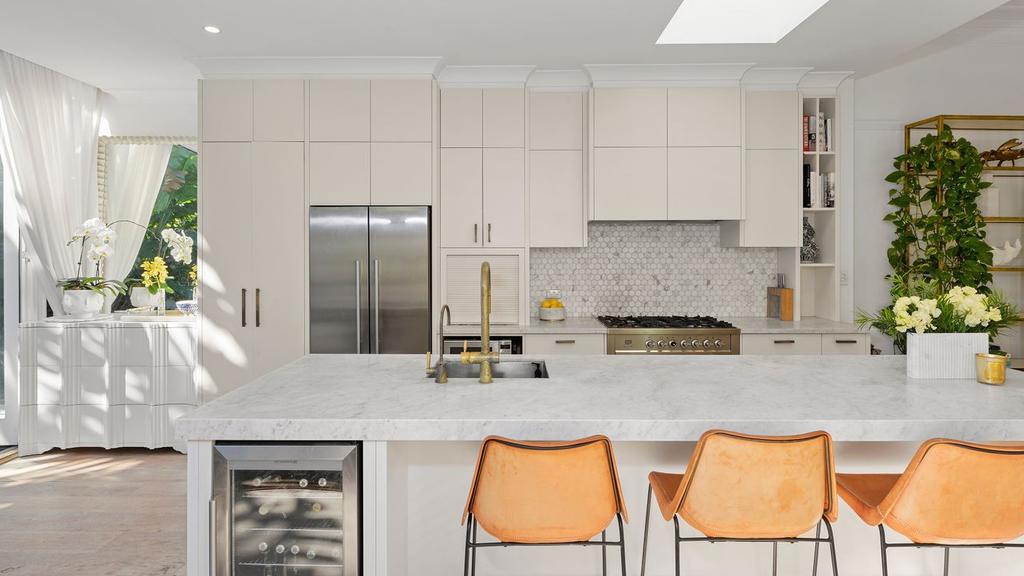
Downstairs, the open-plan living space features a sunken timber living area, a modest kitchen and a dining zone.

“The new sunken lounge area was designed so the owners could look straight out on to the yard from the kitchen zone without furniture obstructing their view,” he said.

“They wanted to maintain as much garden as possible, and for it to be an oasis within inner-city living.”

Outside, the timber deck and its slatted open roof make great use of passive solar design.

“On the north side of the deck, the slatting is much more open and transparent to get full access to the winter sun,” Mr Rhodes said.

“Whereas the timber veil roof is much denser on the western side to block the hot afternoon sun in summer.”
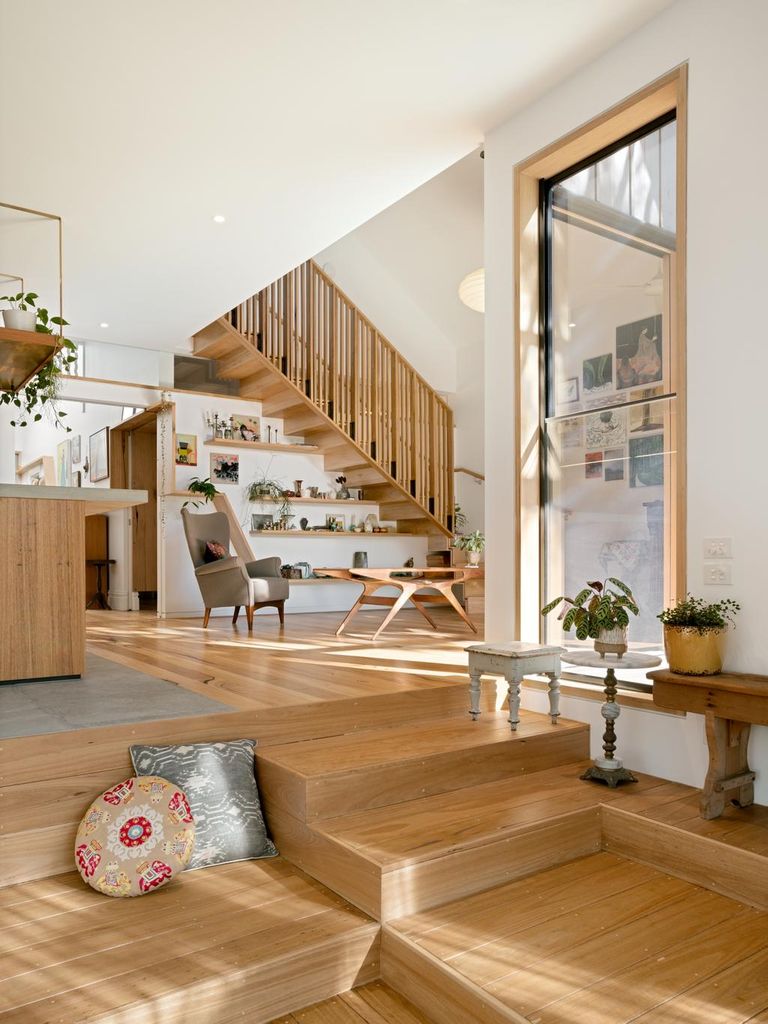
Sunken lounges are back in vogue. Photo: Emma Cross
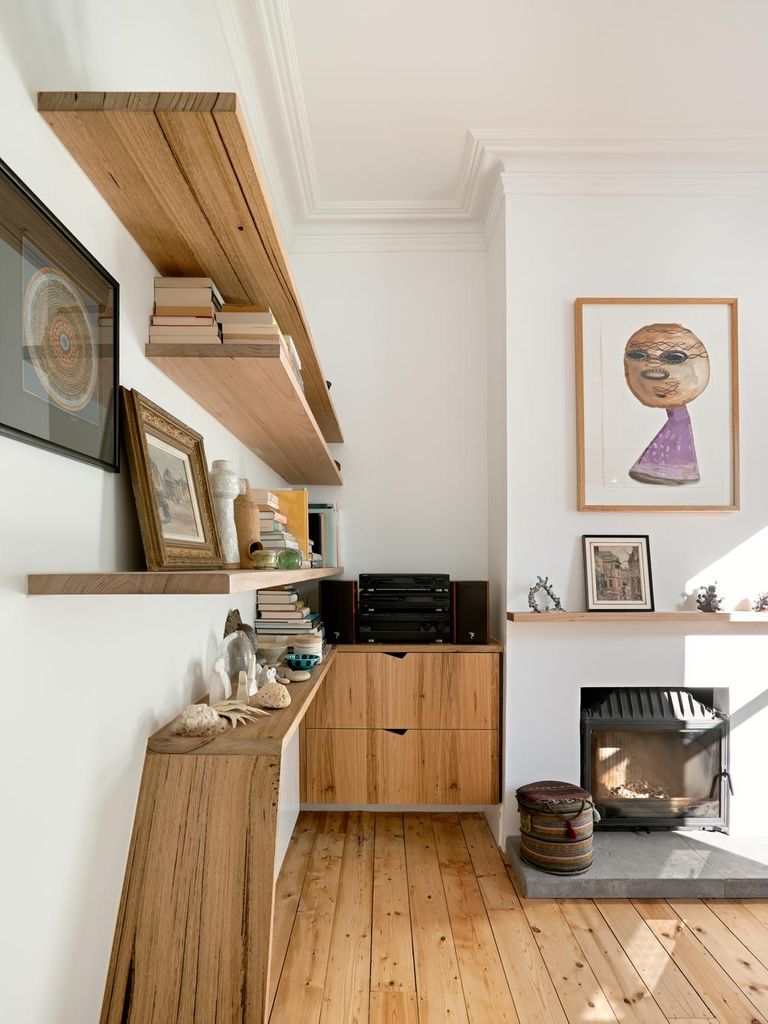
Bright spaces. Photo: Emma Cross
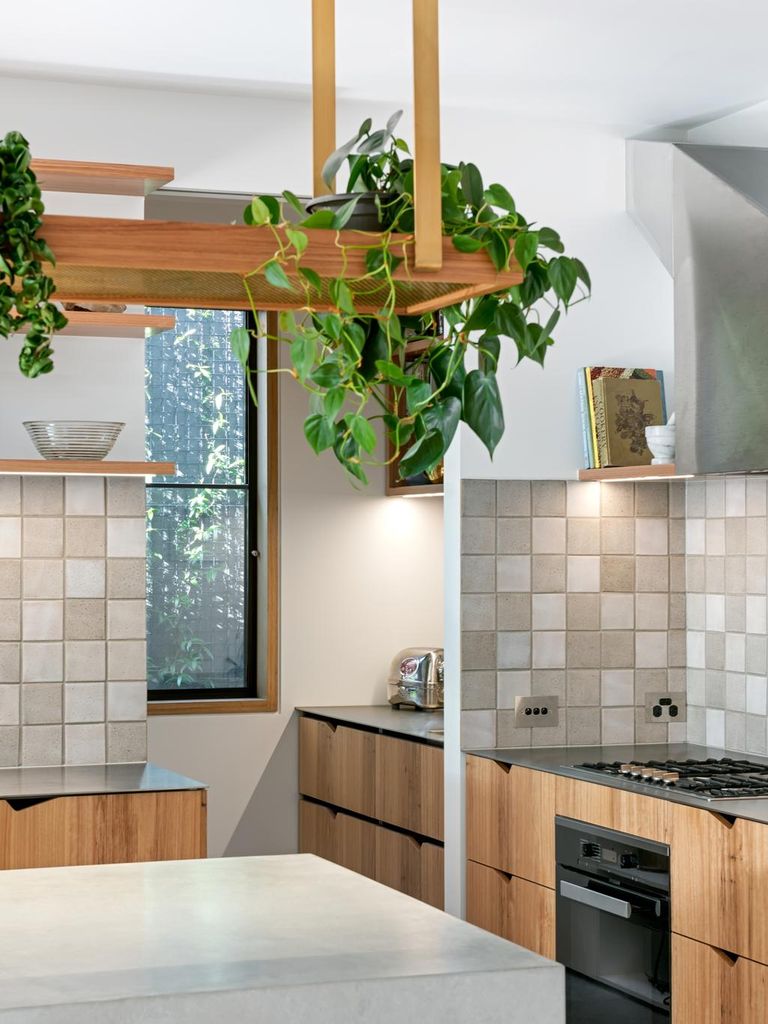
A burst of green hanging in the kitchen. Photo: Emma Cross

L
ocal knowledge

A strong focus on sustainability also underpins the home.

Much of the internal timber work, from the sunken lounge to the floors and timber stairwell, is 100 per cent recycled messmate and blackbutt.

The original Baltic-pine floors were de-nailed and reused, while hydroponic heating was installed alongside ceiling fans for extreme temperatures.

Local furniture makers designed and installed the shelving that runs through the home, serving as a showpiece for the owners’ curios and treasured objects.

The hanging plant shelf in the kitchen was locally made, as were the custom brass components in the bathroom and kitchen.

“Even the splashback tiles and the bathroom tiles are all custom designed and handmade (in Melbourne),” Mr Rhodes said.

“One hundred years ago, local builders built the homes of their neighbourhoods — no one ever really sourced outside their community — and that is what we tried to replicate here.”
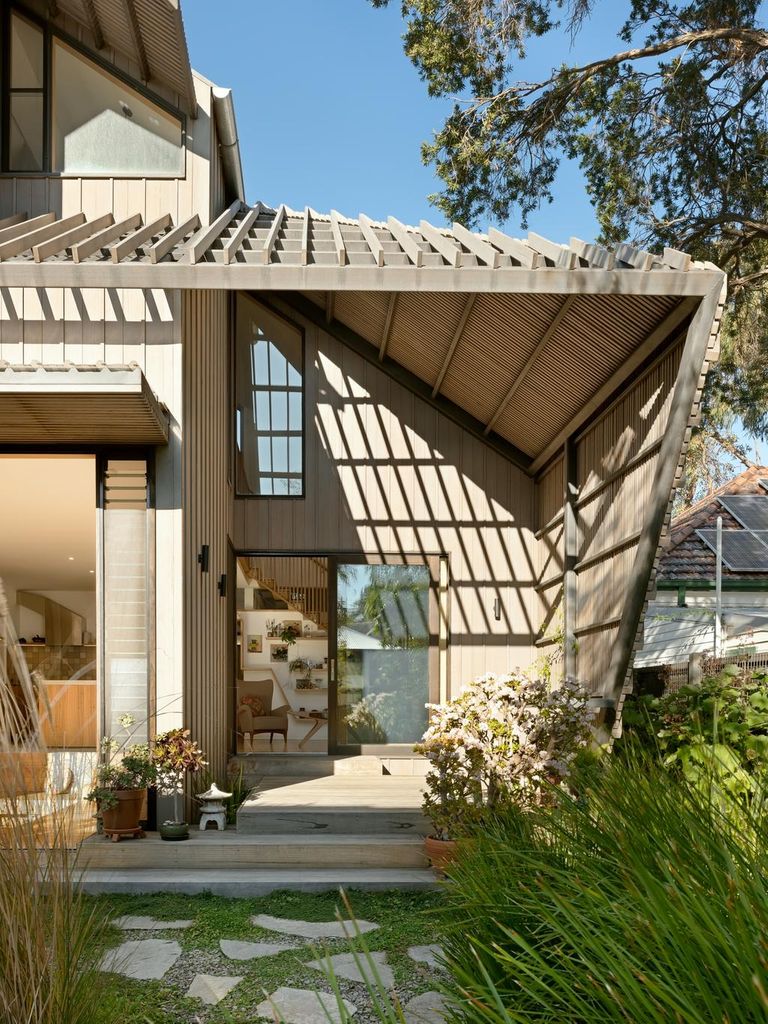
Patterns in the sun. Photo: Emma Cross

MORE: Footscray cottage blends industrial style with Victorian charm

Biggest drop in Melbourne rental prices on record: ABS

Templestowe tempter a private resort among the gum trees

zenarchitects.com

The post Brunswick Victorian house becomes modern masterpiece appeared first on realestate.com.au.

No Comments

Stock low, prices hold while transactions slip further

New Tony Collidge Pic

PRD Hobart director Tony Collidge. Picture: ROGER LOVELL

TASMANIA’S property market is holding up, despite the impacts of COVID-19, a market analyst and commentator says.

While there has been a significant drop in transaction numbers over the June Quarter — down 24.4 per cent on the March Quarter, per the latest REIT report — sale prices have not fallen.

With sales down, the total value of property sales has also retracted.

REIT numbers show nearly 860 million in sales in the quarter, down 21.7 per cent compared to the March quarter.

PRD Hobart director Tony Collidge said the June quarter saw decreases in median house prices in Hobart and Launceston but this can be “attributed to proportionately fewer sales” occurring in each city’s upper end of the market.

“Claims that COVID-19 would decimate real estate markets across the nation has not been witnessed to date,” he said.

Guide Page Three

The investor market has been hit hard, says PRD Hobart director Tony Collidge.

Tony said it was the investment market that had been most significantly impacted by COVID-19.

He said the new Real Estate Institute of Tasmania data showed a 47.3 per cent decrease in investors numbers over the quarter compared to the March results.

“Fortunately Airbnb owners moving back into the medium and long-term rental market enabled this sector to overcome any shortfall in rental supply and shore up consumer needs,” Tony said.

“The drop in investment activity within this state should be of concern to government over the long-term.”

Over the past three years interstate purchasers acquired 19.2 per cent of Tassie properties.

About 42 per cent of these mainland buyers were investors while the remaining 58 per cent were buying property to move in to.

“In the June quarter, only 82 interstate investors acquired property in this state down a whopping 57.9 per cent on the previous quarter,” Tony said.

“Those looking to move here was also down by 39.7 per cent.

“Our market is now being almost totally driven by local activity and interest.”

Tony believes the No.1 factor that has contributed to the stability of Tasmanian property prices is the scarcity of stock with buyer demand significantly outstripping supply for the past five years.

He said this lack of supply has contributed to the continued increase in real estate prices making Tassie one of the best performed real estate markets in Australia.

An example of the shortage, he said, can be seen in the Hobart where there were 57 properties for sale last month compared to 79 one year prior and 162 in 2012.

Throughout the state the story is the same with SQM Research figures showing a drop off in listings that stretches far and wide.

“Clarence receded from 330 eight years ago to 109 in June, Glenorchy from 214 to 70 and Launceston from 939 to 306,” Tony said.

“There remains a void of thousands of properties which the construction industry has been unable to fill and current red tape will ensure that this gap will continue to exist.”

The post Stock low, prices hold while transactions slip further appeared first on realestate.com.au.
No Comments

A small house with a bright future

The “Rhythmic House” in Camperdown by architect Kitty Lee make the most of a tight site with a studio at the rear, Picture: The Palm Co

When a young family was looking to make the switch from a single-storey home to a double storey, they had one vital thing to consider.

The matriarch of the home was slightly vision-impaired, and while this wasn’t an issue ordinarily, it was something to take into consideration with the necessity of a staircase to take the renovation to the next level.

Architect Kitty Lee says the owners had bought the property about 10 years ago and had renovated the kitchen back then.

“The family was happy with house, but they needed extra room to accommodate guests and as their son is getting older, they wanted a play room for him,” says Kitty. “They also weren’t happy with their backyard which was a paved carport.

“It was not an effective use of space, but because they backed on to a laneway, there was potential to add a studio.”

The upper storey offers a views over the courtyard Picture: The Palm Co

The new design involved adding a first floor to allow for two new bedrooms, a bathroom and a study.

A critical part of the design brief was for a set of stairs that would be comfortable and well lit.

Well lit stairs were a key part of the brief, Picture: The Palm Co

The new solid blackbutt stair incorporates concealed LED lighting under each tread and the staircase is naturally lit from above by a large window and skylight. The existing single-storey house would be retained in full and the new staircase and laundry neatly slotted into the old study.

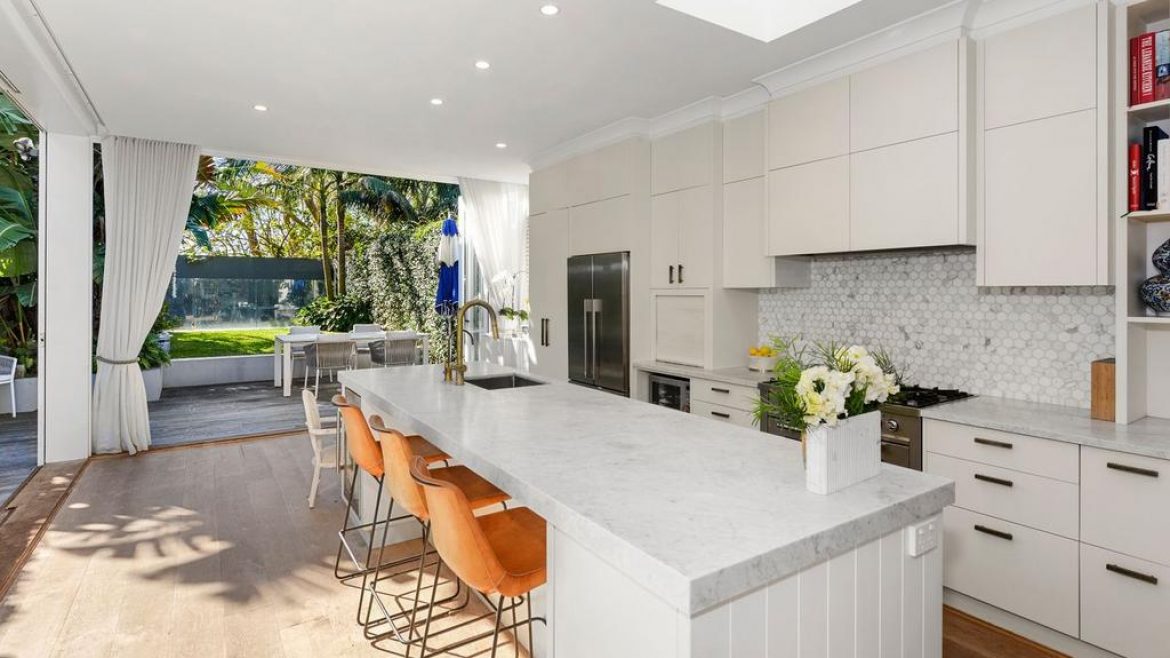
Kitchen joinery is simple but highyl functional Picture: The Palm Co

On the ground floor, only small changes were required to the existing living and dining rooms. The walls were thickened to conceal supports for the new first-floor structure, the timber floors were refinished, the wallpaper was removed and finished with a fresh coat of paint, and full-height sheer curtains replaced the impractical roller blinds covering the bi-fold doors.

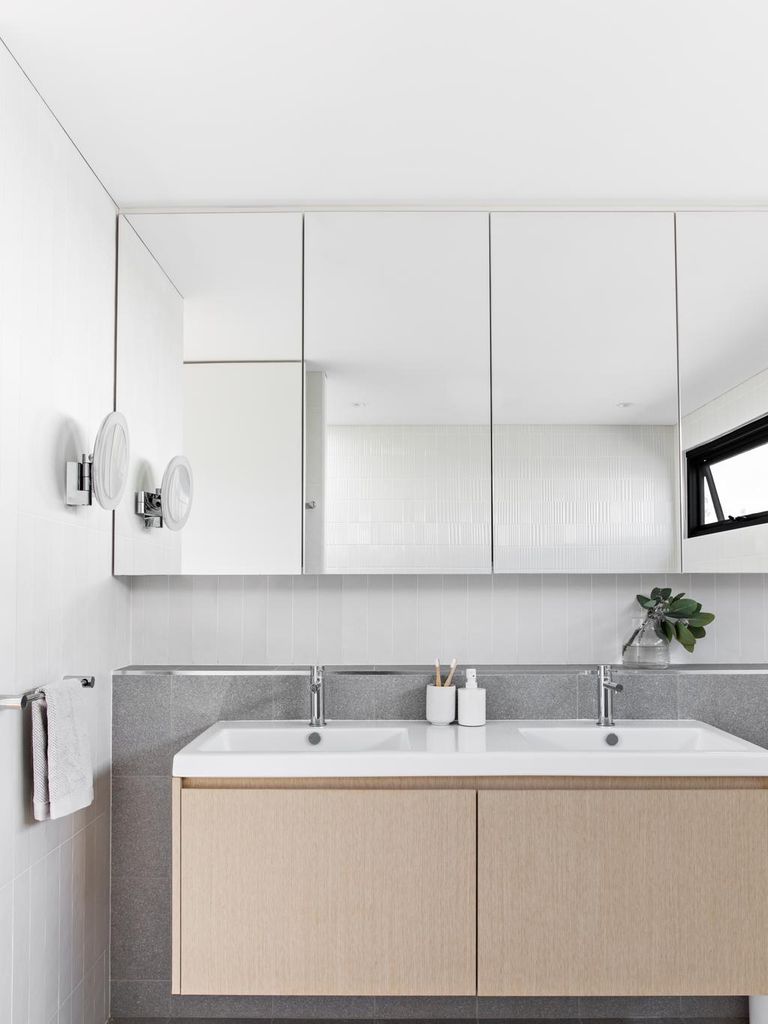
The bathroom is light and bright Picture: The Palm Co

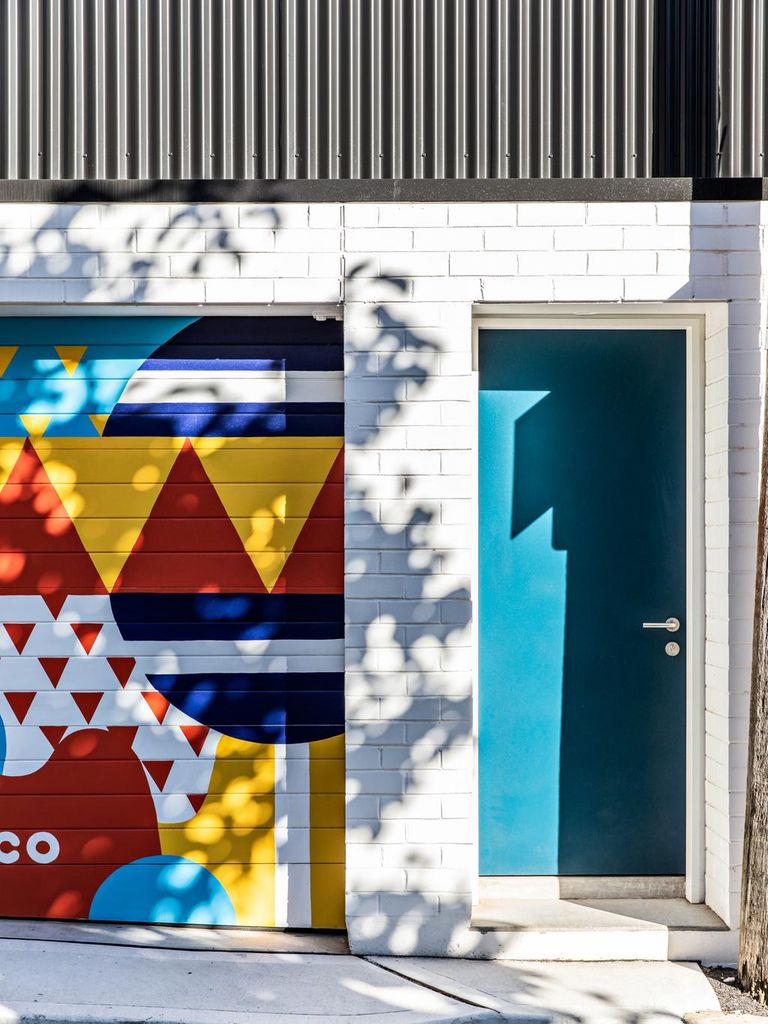
A new two-storey garage and studio to the rear was also constructed and balances the design of the new first-floor addition to the house. Kitty says the building now boldly addresses its prominent position at the junction of two laneways with an impressive artwork on the garage door by artist Nico Nicoson.

The mural by Nico Nicoson has been a hit with the neighbours Picture: The Palm Co

“Everyone’s garage gets vandalised, so to prevent that they commissioned a mural to deter that,” says Kitty. “It’s at a very prominent T-junction and since the work has been done, neighbours have said how much they love the colour and personality of the piece.”

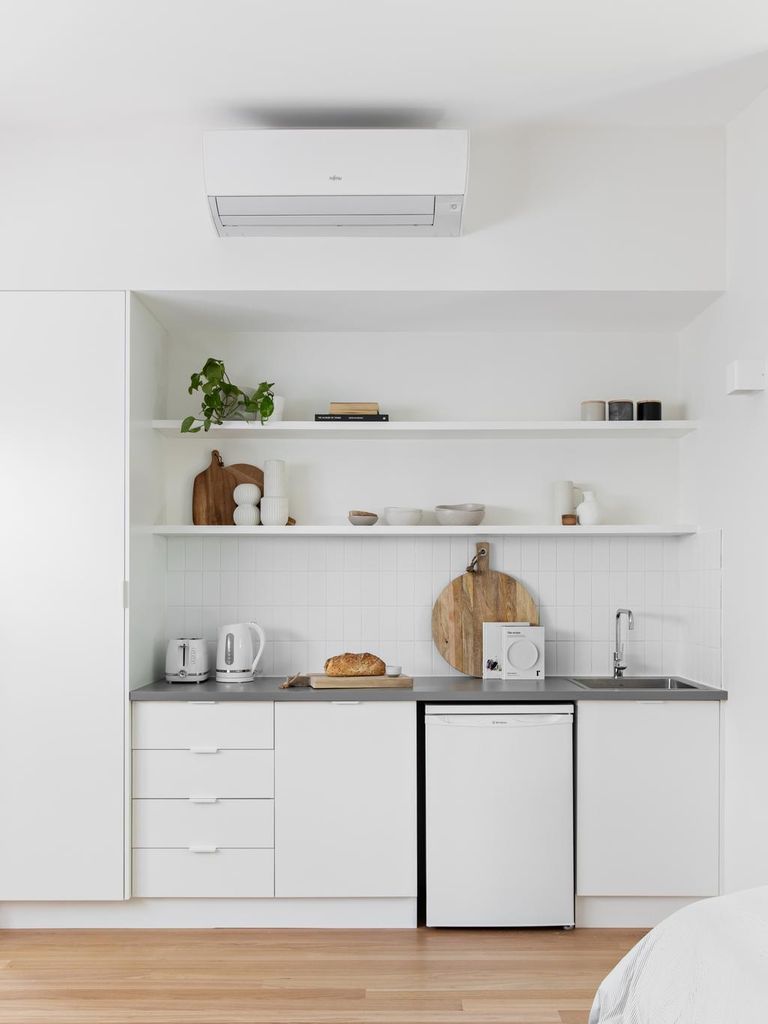
Inside the studio is a simple open-plan space under a raked ceiling. A small kitchenette and wardrobe bridges the living and sleeping spaces while the windows take advantage of tree and sky views.

Pictures: The Palm Co, thepalmco.com.au

Owners

A couple with young son

Architect

Kitty Lee Architecture, klarch.com.au

The brief

To add a new first floor to accommodate two new bedrooms, a bathroom and study

The site

A tight 229sq m block in the inner west

Design solution

A critical part of the design brief was a set of stairs that are well lit for the owner who has slight vision impairment

How long did it take

Nine months

Builder Geometric Construction, geometriconstruction.com

Mural Nico Nicoson, artofnico.com Joiner Oz Kitchens, ozkitchens.com.au

Curtains Koolong Interiors, koolonginteriors.com.au

Electrician Gusto Electrical, gustoelectrical.com.au

Plumber A&G Plumbing, agpro.com.au

Vertical wall cladding, Lysaght Custom Orb, lysaght.com

The post A small house with a bright future appeared first on realestate.com.au.

No Comments

Multiple grants are giving first homebuyers a golden ticket to property ownership

First homebuyers Sutherland

First homebuyers Ellouise Dunn and Robert Cacciola got government support to buy a unit. Picture: Brett Costello

First homebuyers are being urged to capitalise on a raft of government grants and support after further stamp duty incentives were introduced earlier this week.

The NSW government announced Monday that stamp duty will be temporarily scrapped for first homebuyers purchasing newly-built properties worth up to $800,000.

Stamp duty will also be heavily discounted for new homes priced up to $1 million for a period of 12 months.

MORE: Best suburbs for families revealed

Dream homes on offer with massive discounts

The scheme will mean first-time buyers have multiple avenues of support. First-time purchasers of new properties are already entitled to the $10,000 First Home Owners Grant.

The $25,000 HomeBuilder scheme for purchases of new properties priced under $750,000 is also available for single buyers with an income under $125,000 or couples earning less than $200,000 a year.

With stamp duty costs on property purchases often exceeding $15,000, first homebuyers could save as much as $40,000 on their purchases if they access multiple grants.

There is also the federally-backed First Home Loan Deposit Scheme, which allows buyers to get into the market using a 5 per cent deposit without needing to get pricey lender’s mortgage insurance.

Housing Industry Association executive director NSW David Bare said the combined packages offer a significant boost for buyers.

“The government is forecasting that this change will assist more than 6000 first homebuyers, which have traditionally been under-represented in the NSW market, particularly in Sydney,” Mr Bare said.

“Combined with the existing $10,000 First Home Owners Grant and the $25,000 HomeBuilder grant, first homebuyers in NSW should be looking to a new home as a real option.”

PREMIER PRESSER

Premier Gladys Berejiklian said stamp duty incentives would help more first-time buyers get into the market. Picture: Jeremy Piper

The year-long stamp duty initiative was introduced with the aim of propping up the construction sector and injecting confidence into the property market.

NSW Premier Gladys Berejiklian said the changes will deliver a direct financial benefit to home seekers.

“Thousands of people will see their bank balances benefit from this change – it will help get more keys into more front doors of more new homes,” Ms Berejiklian said.

Commencing today, the stamp duty scheme will also raise the threshold for tax exceptions on vacant land purchases from $350,000 to $400,000. Discounts will also apply for land purchases up to $500,000.

First-time buyers Ellouise Dunn and Robert Cacciola recently accessed the First Home Deposit Scheme and said they realised it was a good time to be purchasing.

Aerial Pics for Housing Splash

Buyers of newly built houses can get multiple avenues of support. Picture: Jonathan Ng

The pair snapped up a two-bedroom unit in the suburb of Sutherland in Sydney’s south and said they were “extremely happy” with the property and the deal they managed to negotiate.

“We didn’t think we would get (the scheme) but decided to apply for it anyway,” Ms Dunn said.

“When we got it we had 90 days to buy something, so that motivated us to start looking but we have no regrets. We felt like it was a good time to be looking and rates are so low.”

Belle Property Annandale associate director Simone Azzi said the stamp duty scheme was a welcome boost for the property market.

“(It) could be the difference between buying a house instead of an apartment,” she said.

First homebuyers Sutherland

Ellouise Dunn and Robert Cacciola said it was a good time to buy. Picture: Brett Costello

The government hopes easing the burden of buying a newly built property will stimulate the construction sector, which employs around 376,000 workers in NSW.

Residential and commercial construction contributed $48 billion to the state’s economy in 2018-19.

“This initiative will have positive outcomes for the housing industry and the NSW economy as a whole,” Mr Bare said. “(It) will ensure that there is plenty of suitably priced new housing for first homebuyers to take advantage of right across the state.”

The post Multiple grants are giving first homebuyers a golden ticket to property ownership appeared first on realestate.com.au.